What is SEO and Why Does It Matter?
Search Engine Optimization, universally known as SEO, is the process of improving your website so that it appears higher in search engine results pages (SERPs) — primarily Google — when people search for terms related to your business, products, or services. When someone in India types "best CA firm in Pune" or "affordable website developer near me" into Google, SEO determines which businesses appear at the top of those results.
The importance of SEO cannot be overstated in 2025. Google processes over 8.5 billion searches every single day. In India alone, over 500 million people use Google regularly to find products, services, businesses, and information. If your business doesn't appear on the first page of Google for your target keywords, you're essentially invisible to the vast majority of potential customers — because studies consistently show that over 90% of search traffic goes to results on the first page, and over 60% goes to the top three results.
Unlike paid advertising, which delivers traffic only as long as you're paying, SEO creates compounding, long-term results. A well-optimized page can continue attracting organic (free) traffic for months or years without additional investment. This makes SEO one of the highest-return marketing investments available to any business.
How Do Search Engines Work?
Understanding how Google works is essential for understanding how to optimize for it. Google operates through three main processes: crawling, indexing, and ranking.
Crawling: Google uses automated programs called "spiders" or "crawlers" to constantly explore the internet, following links from page to page and discovering new content. When you publish a new page or update an existing one, Google's crawlers will eventually find it — though this can be accelerated by submitting a sitemap through Google Search Console.
Indexing: Once a page is crawled, Google analyzes and stores information about it in its massive database called the "index." Only indexed pages can appear in search results. You can check whether your pages are indexed by typing "site:yourwebsite.com" into Google — any results that appear are indexed.
Ranking: When someone performs a search, Google's algorithm analyzes all indexed pages relevant to that query and ranks them based on hundreds of factors to determine which results are most helpful and relevant. The algorithm's goal is always to provide the most useful, trustworthy answer to the searcher's query.
The Three Pillars of SEO
Modern SEO rests on three interconnected pillars: Technical SEO, On-Page SEO, and Off-Page SEO. Success requires excellence across all three areas.
Technical SEO refers to the behind-the-scenes optimizations that ensure search engines can efficiently crawl, understand, and index your website. This includes page speed, mobile-friendliness, secure HTTPS connection, clean URL structure, proper use of canonical tags, XML sitemaps, and structured data markup. Technical problems can prevent even the best content from ranking, making this the foundation of any SEO strategy.
On-Page SEO involves optimizing the actual content and elements of your web pages. This includes using target keywords strategically in titles, headings, body content, and image alt text; writing compelling meta descriptions; creating high-quality, comprehensive content that genuinely serves users; and building logical internal linking structures that help both users and search engines navigate your site.
Off-Page SEO primarily refers to link building — earning links from other reputable websites back to yours. These "backlinks" function as votes of confidence in your content. When high-authority websites link to yours, Google interprets this as a signal that your content is valuable and trustworthy, which improves your rankings. Other off-page factors include brand mentions, social signals, and reviews.
Keyword Research: The Foundation of SEO
Before you can optimize your website, you need to understand what your potential customers are actually searching for. Keyword research is the process of discovering and analyzing the specific words and phrases people use when searching for businesses, products, or information like yours.
Effective keyword research considers three key factors: search volume (how many people search for this term monthly), keyword difficulty (how hard it is to rank for this term given competitor strength), and search intent (what the searcher actually wants to accomplish — find information, make a purchase, navigate to a specific site, etc.).
For most small and medium businesses in India, the most effective approach is to target long-tail keywords — longer, more specific phrases that have lower search volume but also lower competition and higher purchase intent. A restaurant in Mumbai ranking for "best pure vegetarian restaurant Andheri West" will get highly targeted, conversion-ready traffic even though that phrase has far fewer searches than "restaurant Mumbai."
On-Page Optimization Best Practices
Once you've identified your target keywords, you need to optimize your pages strategically. The most important on-page element is the title tag — the headline that appears in search results and browser tabs. Your primary keyword should appear naturally in the title, preferably near the beginning, and the title should be compelling enough to earn clicks. Keep titles under 60 characters to prevent truncation in search results.
The meta description — the summary text that appears below your title in search results — doesn't directly affect rankings but significantly impacts click-through rates. Write meta descriptions of 150-160 characters that accurately describe the page content and include a compelling reason to click. Think of it as a free advertisement in search results.
Your heading structure (H1, H2, H3 tags) both helps users navigate your content and helps Google understand its structure and topics. Use exactly one H1 per page containing your primary keyword, then use H2s for main sections and H3s for subsections. Include related keywords and semantic variations naturally throughout your headings and body content.
Content is King — Creating SEO-Optimized Content
Google's primary goal is to provide users with the most helpful, authoritative, and relevant content for their search queries. This means your SEO content strategy must start with genuinely serving your audience, not manipulating search algorithms. Content that thoroughly answers questions, solves problems, and provides unique value will always outperform keyword-stuffed content that treats readers as secondary to robots.
Research shows that longer, more comprehensive content tends to rank better for informational queries. This isn't because length itself is a ranking factor — it's because comprehensive content is more likely to thoroughly address all aspects of a topic, earn more backlinks, and keep readers engaged longer. Aim for a minimum of 1,000 words for blog posts and service pages, with comprehensive guides being 2,000-3,000+ words.
The best SEO strategy is to create the best possible resource on the internet for your target topic. If your content is genuinely the most helpful, comprehensive, and accurate resource available, everything else — rankings, traffic, backlinks — follows naturally.
Building Backlinks: Off-Page SEO
Link building remains one of the most impactful SEO activities, but it requires patience and a focus on quality over quantity. A single backlink from a respected industry publication is worth more than hundreds of links from low-quality directories. Google's algorithms have become extremely sophisticated at detecting and penalizing manipulative link building tactics, so always focus on earning links legitimately.
The most effective link building strategies for Indian businesses include creating genuinely valuable content that others naturally want to link to, guest posting on respected industry blogs and publications, getting listed in authoritative business directories like Justdial and IndiaMART, building relationships with complementary businesses, and earning press coverage in local and national media.
Measuring SEO Success
SEO is a long-term investment — typically requiring 3-6 months to see significant results for a new website, and ongoing effort to maintain and improve rankings. Measuring progress requires the right tools and metrics. Google Search Console (free) shows your keyword rankings, click-through rates, impressions, and technical issues. Google Analytics 4 (free) shows your organic traffic, user behavior, and conversions.
The most important SEO metrics to track are organic traffic (the number of visitors coming from search engines), keyword rankings for your target terms, organic conversion rate (what percentage of organic visitors take your desired action), and backlink profile growth. Review these monthly and adjust your strategy based on what the data tells you.
Get Professional SEO Help
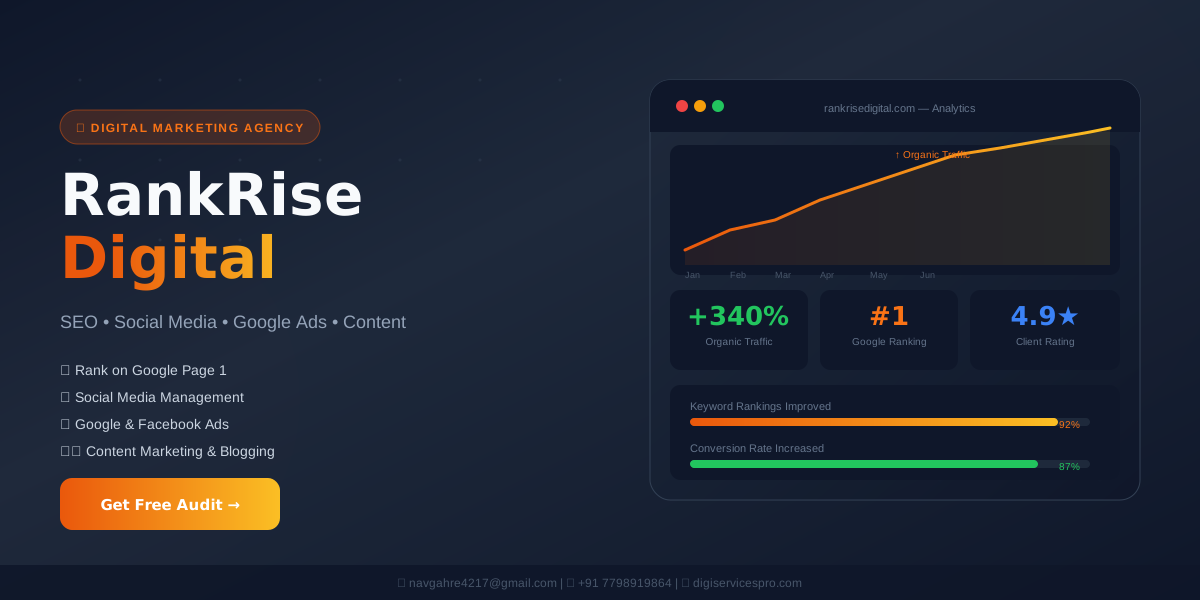
Implementing a comprehensive SEO strategy while running a business is challenging. RankRise Digital — part of the Digi Services Pro family — provides complete SEO services for businesses across India, starting at just $30/month. From technical SEO audits to content creation and link building, we handle everything. Contact us at navgahre4217@gmail.com or WhatsApp +91 7798919864 for a free audit.
RankRise Digital provides SEO, social media, Google Ads and content marketing services starting at $30/month. Get a free audit → or WhatsApp +91 7798919864